
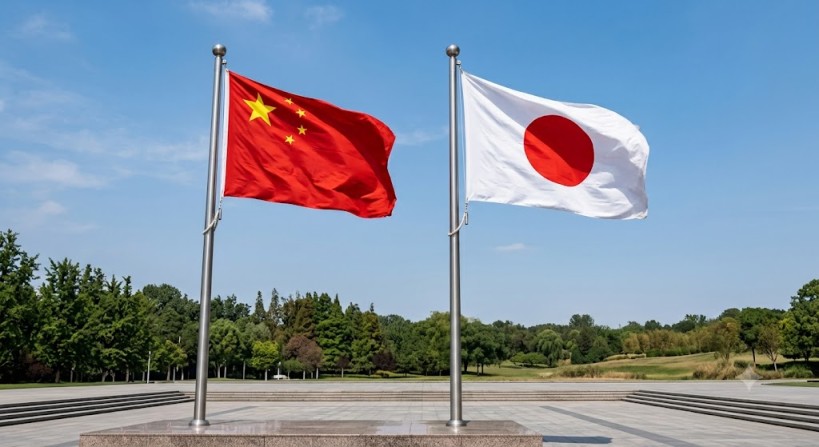
In a recent move that underscores escalating tensions in East Asia, China has imposed new export controls on 40 Japanese entities, accusing them of bolstering Japan’s military prowess and contributing to what Beijing views as a “remilitarization” campaign. These restrictions are set to impact 20 Japanese companies and their respective divisions, some of which are integral components of major corporations. The measures specifically curb the sale of dual-use goods—those that can be adapted for both civilian and military applications—by both Chinese and foreign exporters to these entities.
Additionally, another set of 20 Japanese entities has been placed on a watch list. This classification mandates exporters to obtain special permits, conduct thorough risk assessments, and ensure that any products sold are not purposed for military use. Beijing has justified these steps by citing concerns over Japan’s apparent military expansion, with particular unease over its enhancement of long-range weaponry and its increasing security collaborations with other nations.
Japan, on the other hand, has denounced these export controls as unjustified and has called for their immediate retraction. Japanese authorities have signaled their intention to evaluate the implications of these measures and are considering potential counteractions. The diplomatic friction comes amid Japan’s recent augmentation of its defense strategy, a development that has been met with repeated criticism from China, especially concerning policies related to Taiwan.
Observers suggest that China’s latest restrictions might serve more as a diplomatic signal than a sweeping economic maneuver, yet they highlight the fragile nature of Sino-Japanese relations. The backdrop of this development is a broader canvas of regional security challenges, where both nations are navigating complex geopolitical landscapes.