
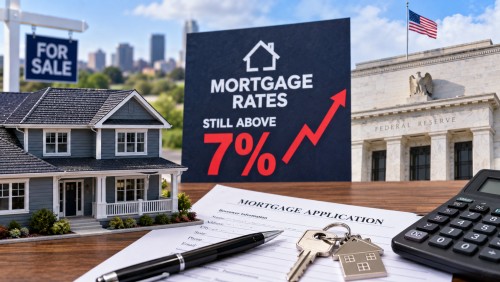
With U.S. mortgage rates persisting above 7%, homebuyers are facing increased borrowing costs, making the dream of homeownership more expensive. As of September 17, 2026, the average 30-year mortgage rate hit 7.37%, while the 15-year rate was 6.62%. These elevated rates follow the Federal Reserve’s recent decision to raise its target interest-rate range to 3.75%–4% in response to inflation concerns.
Despite the Federal Reserve’s actions, mortgage rates are influenced by a variety of factors, including financial markets, inflation expectations, and investor demand, which means they don’t automatically align with Fed rate changes. This divergence has led to a significant increase from March’s 30-year rate of 5.75%, escalating monthly payments for many potential homebuyers.
Borrowers with strong credit scores and substantial down payments may still find opportunities to secure rates below the national average. Additionally, paying mortgage points upfront can lower interest rates, albeit with higher closing costs. Some may consider adjustable-rate mortgages, but these come with the risk of fluctuating rates after an initial period.
The refinancing landscape has also been affected, with the average 30-year refinance rate reaching 7.41% and the 15-year rate at 6.75% as of the same date. Homeowners holding existing mortgages with significantly lower rates might find refinancing less appealing unless it offers substantial savings that justify the costs involved.
Looking forward, mortgage rates will continue to be shaped by economic conditions, inflation trends, and expectations around future Federal Reserve policies. While there is hope for rate adjustments, there is no certainty that waiting will lead to more favorable borrowing conditions.