
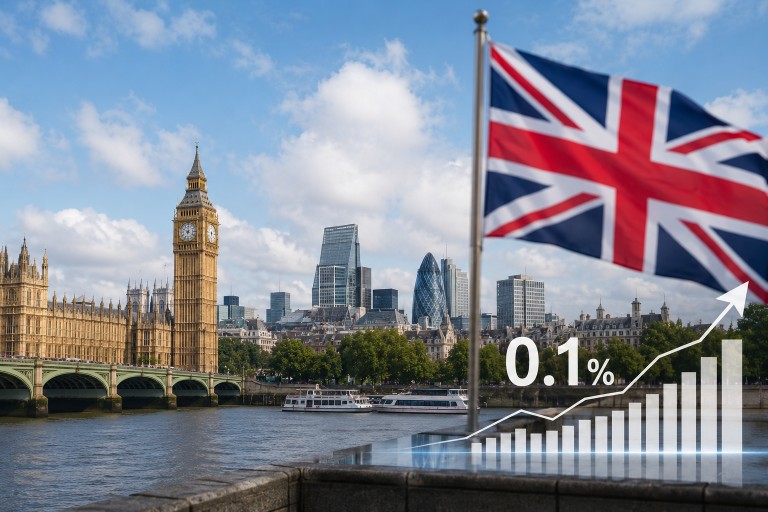
The UK’s economy managed a modest recovery in May, growing by 0.1% following a slight contraction of the same percentage in April. This improvement was primarily attributed to a 0.3% upswing in the services sector, which helped counterbalance the declines observed in other areas. Specifically, production dipped by 0.5%, and construction activity saw a more pronounced drop of 0.8%. A standout performer in this scenario was the scientific research and development sector, which surged by 5.1% over the month.
Over the broader span of three months leading up to May, the economy recorded a 0.7% increase. This marks a slight deceleration compared to the 0.8% growth rate witnessed in the preceding three-month period. Despite challenges, economists highlighted the economy’s resilience in the face of global uncertainties and elevated energy prices, though they warned that these factors continue to pose significant risks.
The backdrop to these economic shifts includes the ongoing conflict in the Middle East, which adds an element of unpredictability to the global economic landscape. Rising energy costs and persistent supply chain disruptions are further complicating the UK’s economic recovery. These factors, economists caution, could potentially hinder growth prospects if they persist or worsen.
In light of these developments, the International Monetary Fund (IMF) has adjusted its forecast for the UK’s economic growth upwards, now predicting a 1% growth for the year. However, analysts remain circumspect, noting that the economic outlook remains fraught with uncertainty due to the geopolitical tensions that continue to evolve.